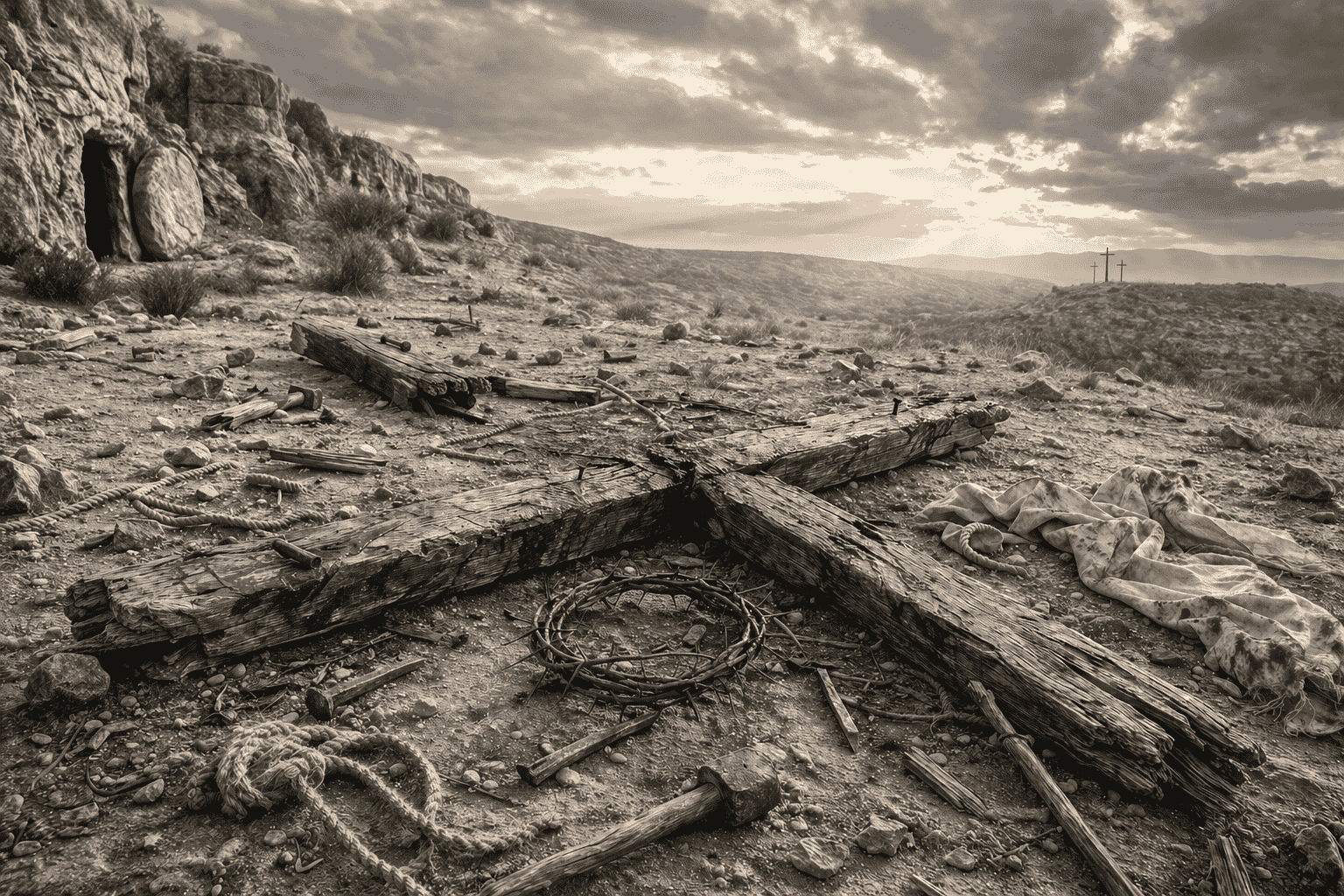
The Day of Silence, Waiting, and Hidden Victory
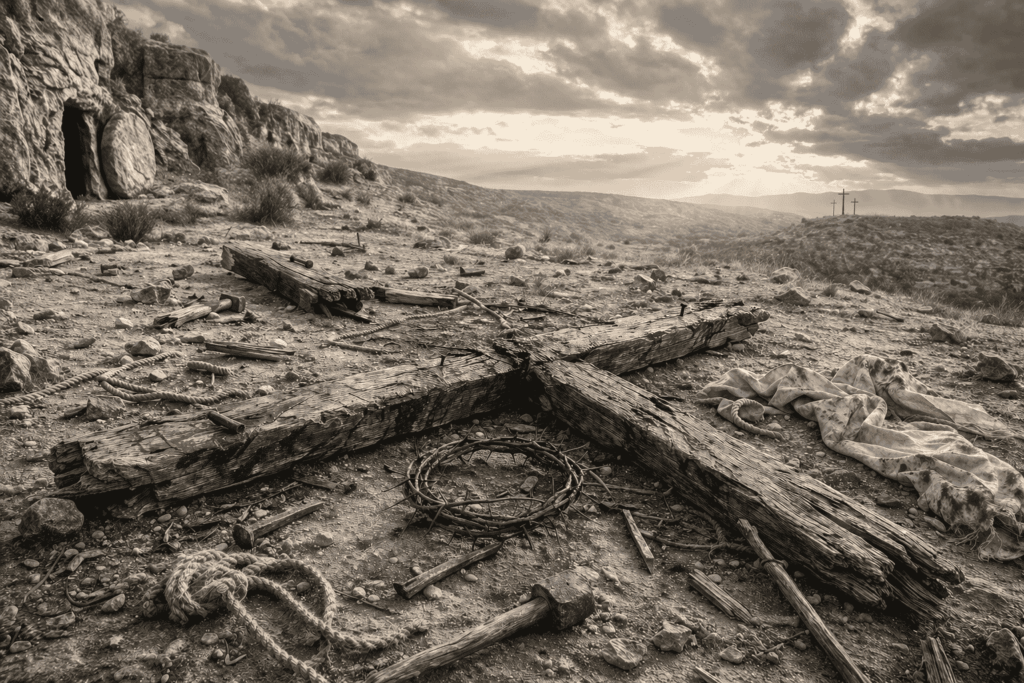
Introduction: The Dark Day Between Death and Resurrection
Holy Saturday sits in a strange and often overlooked place in the gospel story—the quiet, heavy pause between the agony of the crucifixion and the triumph of the resurrection. Jesus has died. His body lies in a sealed tomb. Heaven seems silent.
For the disciples, this day was filled with confusion, fear, and grief. Their Messiah—the one they believed would redeem Israel—had been executed like a criminal. Their expectations of a political and spiritual deliverer appeared shattered.
Culturally, this moment carried weight across multiple groups:
- The Jewish leaders (Pharisees and chief priests) believed they had successfully stopped what they saw as a dangerous movement. Yet even in their “victory,” they remembered Jesus’ words about rising again and took precautions (Matthew 27:62–66).
- The Jewish people were divided—some mourning, some uncertain, others likely returning to normal Passover observances, unaware of what was unfolding.
- The Gentile (Roman) authorities, represented by Pilate, saw this as just another execution, yet they were drawn into securing the tomb, revealing an unusual concern about this particular man.
Holy Saturday is a day where it looks like evil has won, where God seems absent—but beneath the surface, God is still at work.
Primary Texts:
- Matthew 27:57–66 (The burial and the guarded tomb)
- Luke 23:50–56 (The women prepare spices and rest on the Sabbath)
- John 19:38–42 (Joseph of Arimathea and Nicodemus bury Jesus)
Key Verse:
“The next day, that is, after the day of Preparation, the chief priests and the Pharisees gathered before Pilate…” (Matthew 27:62, ESV)
Section 1: Jesus in the Tomb — The Reality of Death
Jesus is truly dead. His body is wrapped and laid in a tomb. The stone is rolled in place.
This is not symbolic—it is final, physical, and devastating.
“So they took the body of Jesus and bound it in linen cloths with the spices, as is the burial custom of the Jews.” (John 19:40, ESV)
Observation:
Everything about this moment confirms death. The hope of the disciples appears buried with Him.
Interactive Questions:
- Why is it important that Jesus was truly dead and not merely unconscious?
- How would you have felt if you were one of His followers that day?
- What expectations did the disciples have that were now broken?
Section 2: The Silence of God
Holy Saturday is marked by silence. No miracles. No teaching. No visible movement of God.
“On the Sabbath they rested according to the commandment.” (Luke 23:56, ESV)
God often works in ways we cannot see.
While Scripture is quiet about this day, some passages hint at unseen spiritual activity:
- 1 Peter 3:18–19 (ESV): speaks of Christ proclaiming victory even in death
- Colossians 2:15 (NLT): Christ disarming spiritual powers
Interactive Questions:
- Have you ever experienced a “silent” season where God seemed absent?
- How do we respond when God doesn’t appear to be working?
- What does faith look like in silence?
Section 3: Fear, Doubt, and Waiting
The disciples are scattered. Fear dominates.
Meanwhile, the religious leaders are still active:
“Therefore order the tomb to be made secure until the third day…” (Matthew 27:64, ESV)
Ironically, the enemies of Jesus remembered His promise more clearly than His followers did.
Observation:
- The faithful are afraid.
- The skeptics are cautious.
- Everyone is waiting—knowingly or unknowingly.
Interactive Questions:
- Why do you think the disciples forgot or struggled to believe Jesus’ promise?
- What fears might have filled that day?
- How do we hold onto truth when circumstances contradict it?
Section 4: The Faithfulness of the Women
While others hid, the women remained devoted.
“The women who had come with him from Galilee… saw the tomb and how his body was laid.” (Luke 23:55, ESV)
They prepared spices, intending to honor Jesus even in death.
Observation:
Their love remained even when hope seemed gone.
Interactive Questions:
- What can we learn from the women’s faithfulness?
- How do we remain devoted to Christ when we don’t see results?
- What does quiet faithfulness look like in your life?
Section 5: The Hidden Work of God
Though unseen, God was not inactive.
What looked like defeat was actually preparation for victory.
- The cross satisfied justice.
- The tomb confirmed death.
- The resurrection would reveal power.
Holy Saturday teaches us that God’s greatest work often happens when we see nothing at all.
Cross References:
- Psalm 16:10 (ESV): “For you will not abandon my soul to Sheol…”
- Hosea 6:2 (NLT): “On the third day he will restore us…”
- Jonah 1:17 (NLT): A foreshadowing of three days in the depths
- Matthew 12:40 (ESV): Jesus predicts His time in the grave
Interactive Questions:
- Why does God sometimes allow waiting before breakthrough?
- How does understanding God’s hidden work change your perspective?
- Where might God be working in your life right now that you cannot see?
Life Application: Living in the “In-Between”
Holy Saturday is deeply relatable.
We all experience seasons between promise and fulfillment:
- Between prayer and answer
- Between suffering and healing
- Between loss and restoration
Key Applications:
- Trust God in the silence
Just because God is quiet does not mean He is absent. - Hold onto His promises
The disciples forgot—but God did not. - Stay faithful in the waiting
Like the women, continue showing up in love and obedience. - Recognize that waiting has purpose
God uses the “in-between” to prepare us and reveal His glory.
Reflection Questions:
- What “Holy Saturday” season are you currently in?
- What promise of God do you need to hold onto today?
- How can you remain faithful while you wait?
Conclusion: Hope Is Coming
Holy Saturday ends in silence—but it does not end the story.
The tomb is not the final word.
What feels like defeat is often the doorway to resurrection.
For the disciples, Sunday was coming—even if they didn’t yet believe it.
For us, the same truth holds:
- Your waiting is not wasted
- Your pain is not pointless
- Your story is not over
Encouragement:
Even when you cannot see God moving, He is working.
Even when hope feels buried, resurrection is near.
“Weeping may tarry for the night, but joy comes with the morning.” (Psalm 30:5, ESV)
Hold on. Sunday is coming.